
Why 'Domestic Violence' is Too Small a Term
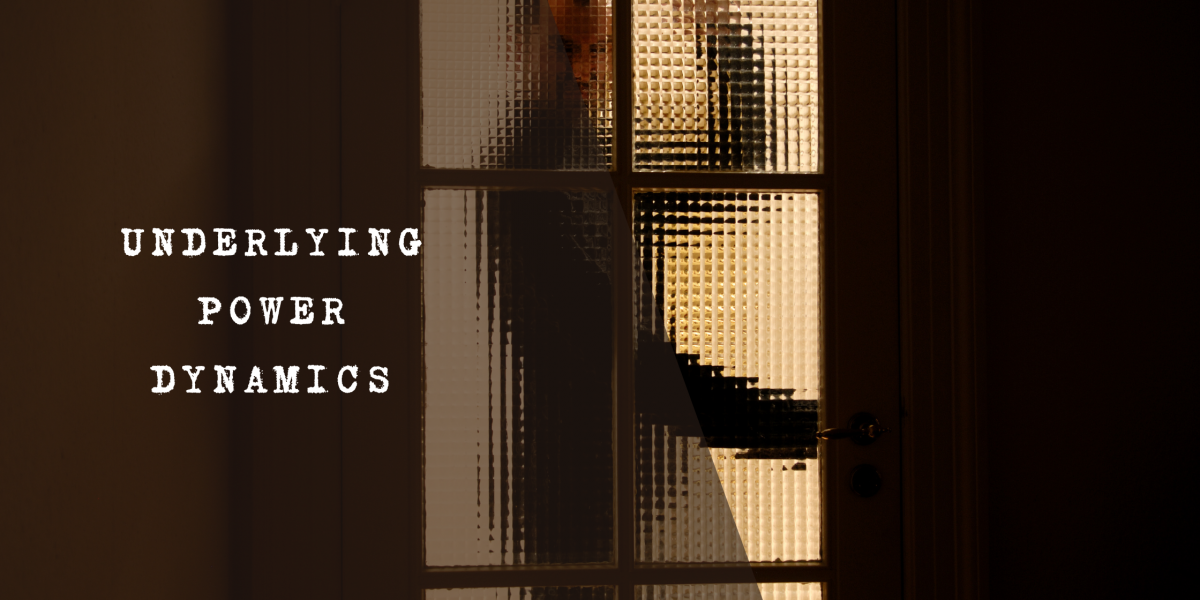
Underlying Power Dynamics
When we try to explain abuse and the tactics they use, it is really hard to explain in those initial moments. There have been so many incidents that you do not really know where to start. We usually rely on the terms we hear most in the media and from the police: domestic violence or intimate partner violence, a label of which I object to very strongly. These phrases are designed to make us think of a specific scenario, usually a husband and wife, or romantic partners, locked in a toxic relationship. But what if those relationships were not there to begin with? What if they were completely arranged or manipulated?
When we look closely at how people are actually harmed, these conventional labels fail completely. They are simply too small. They fail to acknowledge the full spectrum of abusive dynamics that occur when a predator deliberately crafts and forces a distorted reality onto someone else.
When we reduce everything to intimate partner violence, we completely misunderstand how certain predators operate. For instance, many individuals don’t even know they have a stalker until it’s to late, others experience relentless abuse from stalkers or people who slowly immerse themselves into their lives, testing boundaries, introducing themselves to family or friends without your knowledge, and wearing the victim down until they are completely exhausted and become submissive due to the consequences of fighting back. Thousands of cases are not a pathway from traditional domestic violence, and they should never be dismissed as such, but here we are.
In fact, many abusers exhibit a clear pattern of repeating socially harmful behaviour prior to the current victim. You will always find previous victims and post victims. The stalker can create chaos and crisis in one person’s life, and the moment they are discovered or challenged, they simply become more aggressive, pay people to intimidate, manipulate people to watch, or move on to a new target to repeat the process whilst still monitoring the previous victim or target.
The Institutional Blindness Behind the Door
Because the system is obsessed knee jerk reactions and of course with quick labels such as domestic violence stalking, it rarely looks at the actual roots of the crime. Why? Because it is time consuming, which means money, which means a public economy that is treated as unaffordable (depending on who you are). This highlights the absolute necessity of asking individuals about the true origins of their relationships.
During my work in supported care, refuges, and with women’s aid projects, I decided to ask the women a very simple question in a small group talk: “How did you meet?”
When we looked at the answers, the reality was shocking. Six out of the eight women in that room were actually victims of calculated stalking and violent tracking assaults. Yet, the police and support services had incorrectly identified every single one of them as victims of standard domestic violence and in some cases, social services used threats of a PLO (Public Law Outline) to rehouse their children into foster care. The system had made this mistake simply because some of the violence had eventually taken place inside a house, which in turn, moves to a private matter depending on who you are and your postcode.
This is a massive institutional failure. It shows that our legal and support systems are blind to the actual dynamics of abuse. If we do not ask the right questions from the very beginning, we cannot possibly provide the right support with referrals being sent to the wrong services. We leave the victim trapped in a cyclical framework that does not understand the gravity of the situation or her reality.
The Toolkit of Hidden Domination
Predators do not just use physical violence to control someone by attacking them into submission. They use a massive toolkit of subtle, non-physical tactics also to take over a life. They rely on constant harassment, using third parties to spy or intimidate, creating total financial instability, and even manipulating professionals to conduct surveillance on the victim. In many cases, they will happily weaponise children, take them from school without your consent, get them to join in belittling you, hurting you or threaten extreme violence against them just to maintain their authority over you.
By recognising the strict limitations of terms like domestic violence, we can advocate for a much simpler, broader understanding of abuse. We need to look at harmful behaviour across all kinds of crafted, created, and natural relationships, because how else will you learn? Only then can we see the true impact of siloing harm and build real pathways to support those surviving emotional and physical abuse.
At its core, these actions stem from an assumption over the predator’s desire to dominate, manipulate, and instil fear through a course of conduct that has so many angles, you do not know which one came first. This means, if you didn’t ask the right questions, you will see the same names come up over and over and over again as the serial offending goes unchecked.
That is if he has ever legally been challenged. Sometimes leaving a dirty footprint in a court index as the complainant brings a civil case before the court. If that case is heard, the name is there in black and white regardless of them telling people they had to take action against the victim, it’s an all-too-common calculated distraction technique designed to completely rewrite the narrative. By playing the victim, launching pre-emptive legal actions, or convincing family or friends that they are the ones under attack, they use society’s own biases to mask their crimes. It is a performance designed to make the victim look unstable while they present a flawless face to the world. Of course, these skeletons have a habit of dancing out of closets, and so they should.
To challenge this, we have to look past the lazy labels used by call handlers, police officers or support staff. We must stop letting institutions treat long-term, predatory campaigns as simple, one-off domestic disputes just because they happen behind a closed front door. Victims deserve a safe system that is willing to look at the whole picture, ask the right questions, and call the constructed crime by its real name.
And this brings us right back to the physical reality of the boundaries we encounter. When an abuser stands outside, knocking aggressively or looming behind a frosted glass door, the system chooses to look at that glass and see a blurry, indistinct domestic dispute. They treat the closed front door as a shield for administrative convenience, a way to declare a public safety crisis a private matter and walk away many times.
But the underlying power dynamics do not vanish just because an institution refuses to name them. The terror is real, the surveillance is calculated, and the serial pattern continues, it’s a game of longevity.