
Bias Against Single Mothers
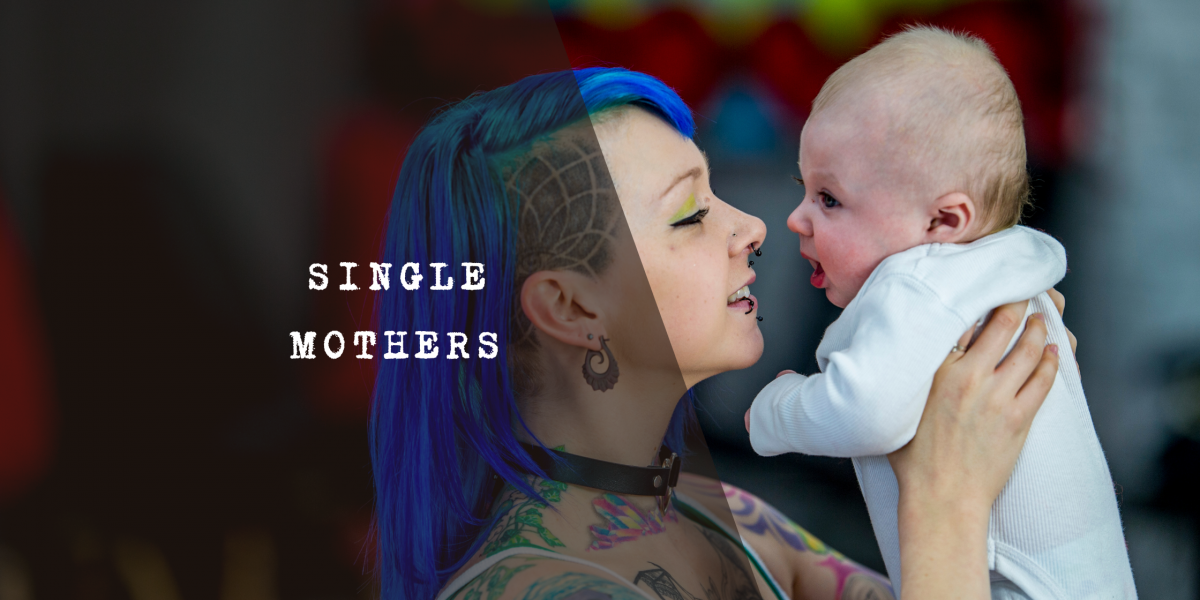
Breaking Cultural Stereotypes
How Society Punishes Single Mothers While Letting Fathers Walk Away
If you want to understand how a society truly values women, look at how it treats single mothers. In the United Kingdom, there are nearly two million single-parent families, making up around a quarter of all families with children. Dissolution of relationships happens, and family structures evolve. Yet, the cultural narrative surrounding single motherhood remains stuck in a damaging, retrogressive loop.
Single mothers are routinely stripped of their rights and dignity. They are stigmatised, financially marginalised, and socially punished for the crime of being abandoned and holding their families together. All too often, they are met with the cold dismissal of: “You made your bed, now lie in it.” Conversely, the fathers who walk away are met with a collective shrug from society. They are allowed, and sometimes even expected, to simply start again. This broad disparity represents one of the most widespread double standards in modern Britain.
The Myth of the ‘Broken Home’
From the tabloid press to political elite rhetoric, the single-mother household is frequently weaponised as a symbol of societal decline. The term ‘broken home’ is telling. It implies that a family without a co-resident male is inherently fractured, damaged, and lesser-than.
Single mothers are forced to navigate a toxic duality of judgment:
- The ‘Welfare Queen’ Myth: If a single mother relies on state support to survive while raising young children, she is branded as lazy, dependent, or a drain on the taxpayer—regardless of whether she was a solicitor or a doctor before having children.
- The ‘Selfish Careerist’ Narrative: If she works shift patterns as a police officer, a mental health crisis officer, or a paramedic, working long hours to provide for her children, she is accused of neglect and putting her career ahead of her children’s emotional well-being.
She simply can’t win.
Every choice a single mother makes is up for public debate. Her parenting style, her financial situation, where she lives, her friends, how she dresses, how she dresses her children, her mental health, the food she buys, and even her dating life are judged through a moral outrage that casts suspicion. Society pathologises her situation, treating her single status as a personal moral failure rather than the result of a relationship breakdown involving two people.
Institutional Punishment
The bias against single mothers is not just social; it is deeply embedded in the UK’s economic, property, and health infrastructures. Staying to raise your children alone in Britain comes with a catastrophic financial penalty, with single-parent families facing disproportionate levels of poverty. The system squeezes these women in three distinct ways:
- The Childcare Crisis
The UK has some of the most expensive childcare in the world. For a single mother, childcare is not an optional luxury (although it is treated like one); it is supposed to be the safe bridge to employment. Without a second income to offset the cost, many mothers find that working actually costs them money. This forces them into low-paid, insecure temporary contracts or part-time work that sits far below their actual skill levels, locking them out of career progression.
- The Motherhood Penalty and the Pay Gap
Women already face a gender pay gap, but the ‘motherhood penalty’ hits single mothers hardest. Employers routinely view single mothers as high-risk employees who will take time off for sick children or refuse overtime. The flexibility they desperately need to manage a household alone is often treated as a lack of ambition, leading to missed promotions and stagnant wages.
- The Failure of Child Maintenance
The Child Maintenance Service (CMS) in the UK is notoriously toothless. Billions of pounds in unpaid child maintenance go uncollected every year. Overwhelmingly, fathers exploit loopholes, self-declare artificially low incomes, or simply refuse to pay. This includes professionals such as police officers, solicitors, or soldiers, who know that enforcement is slow and exceptionally rare. The financial burden of raising the child is left entirely on the shoulders of the mother, while the state looks the other way.
How Absent Fathers Escape Accountability
While the single mother is anchored by coercive responsibility, the father who leaves (with his wages intact) is granted an extraordinary degree of mobility and exceptionally good jobs. In the cultural imagination, a man who walks away from his children is often viewed not as a failure, but as someone who simply ‘made a mistake.’
This social framing as a ‘mistake’ provides immediate cover for what is actually a calculated choice to preserve personal freedom and career mobility. By walking away because it is “all too much,” they shed the domestic and financial constraints of parenting, allowing them to dedicate unlimited time to professional advancement. Society then rewards this mobility with freedom, career success, and more money, while treating the abandonment as a private lapse in judgment rather than a systemic failure
Social Absolution and Lowered Bars
Society operates on a baseline of incredibly low expectations for biological fathers. This happens because society treats fatherhood as an optional, secondary identity rather than an absolute duty. If a father leaves, friends and family actively protect his social status by rationalising it: “The relationship just didn’t work out,” or “He wasn’t ready to be a dad.”
This collective excuse-making successfully decouples his public identity from his parental failure. By shifting the narrative from a breach of responsibility to a mere emotional mismatch, the community grants him a clean slate. He returns to the dating market as an unencumbered bachelor, his career trajectory uninterrupted, and his social life intact. So, in reflection, how many single mums are made from someone simply not being accountable?
The Total Scale of the Gender Breakdown
Women overwhelmingly shoulder the domestic outcome of this reality, with the Office for National Statistics (ONS) reporting that 84.6% of lone-parent households are headed by single mothers. According to the single-parent charity Gingerbread, this equates to around 2 million single mothers raising dependent children in the UK, anchoring a massive portion of the 3.2 million lone-parent families identified across the country.
The ‘Fun Dad’ Phenomenon
When an absent or weekend father does choose to participate, he is often showered with praise for doing the bare minimum. A father taking his child to the park on a Saturday afternoon is celebrated as a devoted dad.
Meanwhile, the mother who managed the sleepless nights, the school runs, the dentist, hospital, or doctor’s appointments, the emotional meltdowns, getting to work on time, and the budget constraints all week is viewed as bitter or demanding if she asks for help. The mother does the invisible, unglamorous, exhausting groundwork of survival. The father is permitted to swoop in for the highlight-reel moments, enjoying the rewards of parenthood without any of the daily, and often financial, sacrifices.
The Sanctuary of the Solo Home
Speaking from experience, I will say this… your sanctuary is an absolute necessity. Even when you are standing there looking at the dirty floorboards and the poo smeared on the wallpaper that is falling off the wall, it will be home. Or at least, it will be once you get into the groove of cleaning it up.
This weird little Dutch bungalow is something I enjoyed in 1986 after deciding to build a life just for my eldest daughter, who was one year old, in our very first home. I was nineteen. Her biological dad was twenty-two, a roofer with a mop of spiky blonde hair who looked exactly like Billy Idol.
Unfortunately, his absolute craving wasn’t for music but for alcohol, and it became a beast within. He would often turn up drunk at my parents’ house, threatening to kill himself. When he slit his wrists in the garden, that was the last straw. Sitting with my dad in the back garden, I told him I planned to move away and exclude my daughter’s dad. This included denying who he was to her, and not claiming money from him, as this was an unsafe pathway that would have given him legal access, and he would have caused her great distress. Continuing to feed his chickens, my dad told me that he was there if I needed anything, and true to form, he arrived to wallpaper my living room with my mum. Thus began the single mother journey of stigmatisation, bias, and mobbing, which is something I will talk about in another blog.
Thus began the single mother journey of stigmatisation, bias, and mobbing, something I will talk about in another blog!
The neighbours didn’t like me being a single parent, but inside our home, we built our own happiness with my brothers and sister popping in for tea, movies, or babysitting for me. Our movie nights, the park, the beach, the picnics, and the walks became our foundation for loving my little family without the chaos. Beneath the weight of his chaos and the outside judgment from the neighbours lies this quiet victory: the immense peace and beauty of a home run entirely on your own terms.
When you reflect and cut that unpredictable behaviour and noise out of your life, the tension and broken promises go with it, leaving behind a space that can finally heal. In this sanctuary, you are in total control. Unfortunately, as for my daughter’s biological dad, he never got to earn his father’s status. Across the span of four decades, he has fathered numerous children, married multiple times and has never won the fight with alcohol.
When the lifestyle routine runs smoothly, even though you have little money and are without that outside disruption, the household transforms into serenity. These smooth, joyful moments, the calm bedtimes, and the absolute certainty of our daily routine are not just pleasant, they’re peaceful. They are a powerful testament to the fact that being a single-parent family is not as ‘broken’ as the media or the government suggests, but a complete and deeply loving home for most.
It certainly was for us, until 1991, an experience I will share with you at a later date.