
Misplaced Outbursts and Systemic Harm
Why Outbursts Are Actually Systemic Breaking Points
When you see someone lose their temper, it is easy to assume they have anger issues. Mainstream views blame the person, claiming they lack self-control. These reactions happen because people are pushed to their limits by everyday pressures like money, housing, and work.
Understanding why someone reaches a breaking point does not mean excusing bad behaviour. If someone lashes out and hurts others, they are still responsible for their actions. But we must also look at the pressures that cause issues in the first place. However, we must differentiate between an emotional breaking point and intentional abuse and that breaking point – both the same label; meaning breaking point, but both have different connotations.
If a perpetrator uses violence to control or intimidate others, that is a choice to inflict harm, not a survival response. Systemic pressure explains stress, but it never excuses or validates abusive behaviour.
Society treats behavioural volatility as an internal deficit, a character flaw, or a lack of self-control. This framework isolates the event from its daily context. It frames the person as a singular risk to be managed, policed, or medicated. A structural perspective rejects this isolated view. It exposes how state and corporate systems systematically generate the desperation that leads to behavioural collapse (breaking point).
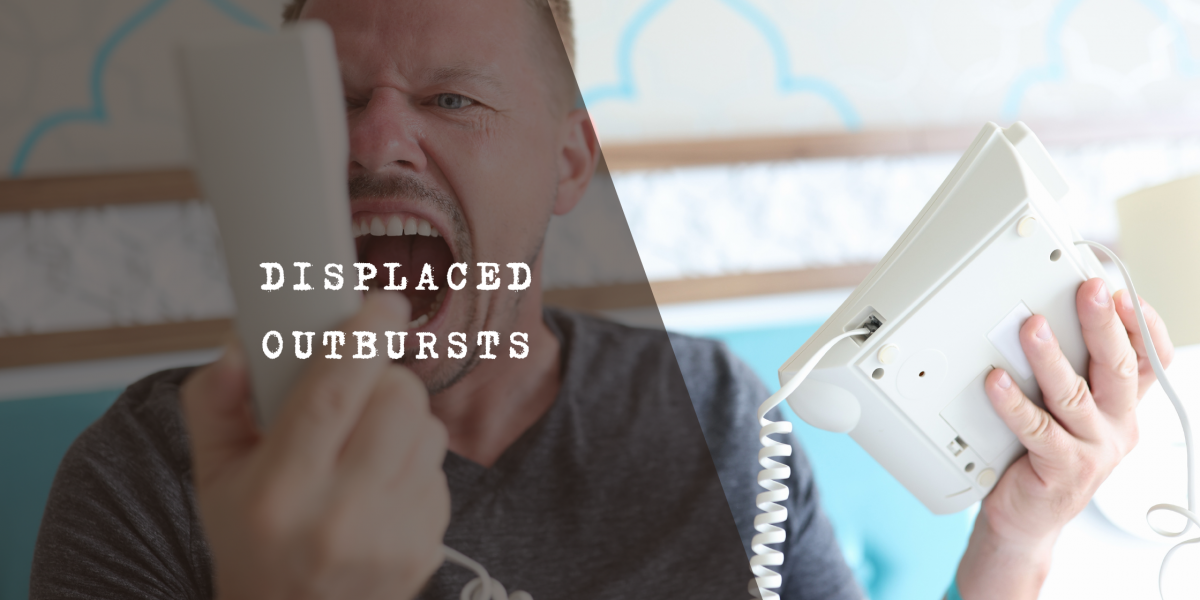
In the image, you see a man shouting at the phone but you unaware which breaking point he is at. Outbursts are often a form of displaced pressure. They represent the point where the weight of institutional neglect becomes physically and psychologically unbearable. The current system focuses entirely on punishing the reaction rather than fixing the cause. When an individual reaches their limit, the state steps in to penalise the behaviour. This approach ignores the structural pressure that built up beforehand.
People do not simply decide to snap. They are gradually ground down by insecure jobs, rising costs, and poor public services, it’s a gradual build of pressure. By the time the outburst happens, the individual is already exhausted from trying to survive. Punishing them does nothing to solve the underlying problem. It merely conceals the harm caused by institutions.
Left in the Dark When You Need Help
Many organisations operate as if everyone has the same health, time, and security. In reality, state agencies actively manufacture the very crises people face. For example, seven days before my dad died from severe COPD, the Department for Work and Pensions (DWP) claimed he was fit for work. He was in hospital with blue lips, but they decided his fate through a form, without ever meeting him.
The system treats severe, life-threatening illnesses as a tick-box exercise to protect budgets, completely ignoring human reality. This institutional neglect is a form of violence. When public bodies fail in their statutory duty of care, they expose families to extreme psychological and physical harm. Failures in recognition leave people seriously harmed or dead. Expecting individuals or grieving families to remain calm under this pressure is an institutional contradiction.
When a person tips into overwhelm under these conditions, their nervous system enters an involuntary survival mode. The state misinterprets this panic as public disorder or non-compliance. This allows the system to ignore its role in generating the initial trauma. Explaining the origins of this intense stress does not validate the infliction of harm on others. Personal accountability for one’s actions remains absolute, but the system must be exposed for creating the baseline volatility.
Ignored and Silenced by Officials
Outbursts often happen when words fail. Complex systems use complicated rules and jargon that keep ordinary people at a distance. When you cannot find the right words to explain your problem, frustration builds up. Too often, staff in housing or welfare offices listen only to tick boxes to protect the company and get you to comply with requests. They do not listen to understand your actual life. This makes people feel completely invisible.
When ordinary talking gets you nowhere because the system is biased against you, an outburst becomes a desperate attempt to be noticed. In encounters with the state, individuals face a long list of numbered forms you have to fill in. These are great for the academic who is very proud of themselves, but not so great for the general public who has to decipher the meaning. This language is designed to exclude. When a person cannot find the words to articulate their trauma within rigid parameters, their frustration mounts.
Officials often listen only to extract data that fits pre-existing institutional narratives. They do not listen to comprehend the human reality. This refusal to hear creates a secondary trauma. The individual realises that the truth of their experience is being erased by official documentation and the AI systems that are being developed. By controlling the language used, institutions decide whose problems are valid and whose are dismissed. An ordinary citizen is often told their experiences do not fit the criteria for help. This bureaucratic rejection feels like a deliberate erasure of humanity.
The resulting rage is a reaction to being completely erased from the conversation. While this explains the intensity of the emotion, it does not mean people should use intimidation. It shows that systems must change how they communicate if they want to prevent these breaking points.
The Lie of Just Coping Better
We are constantly told that we just need to be more resilient. The modern narrative says that if you are struggling, you should try mindfulness or better coping skills. This shifts the blame away from the organisations making profit and onto you. When my dad passed, nobody helped my mum to live independently. Instead of receiving structural support, she faced a system that completely abandoned her. This neglect led to many outbursts as younger family members took over her life, stripping away her autonomy.
These outbursts were not part of emotional regulation. They were a reaction to a complete lack of state support during a time of loss. Neoliberal ideology insists that structural hardship can be mitigated through personal adaptability. This shifting of blame protects corporate and state actors, like GP surgeries when people get angry for mistakes made in their practices. If you have a hidden disability like autism, a lack of support means you face constant friction every day which make you anxious when attending interviews, then you get a bit chewy at people. A meltdown is not a personal flaw, it’s the result of staff refusing or understanding or adapting to your needs.
We should look at both sides of the problem. The resilience industry has become a multi-million-pound tool for institutional deflection. Instead of funding public services or paying living wages, corporations offer wellness apps and stress management courses that people can’t use because of older tech or can’t get on the poor quality group courses, and of course these are not audited, they’re just there for the referral and to say it has been addressed, whatever it is!.
This sends a clear message to the public that the problem is your inability to cope, not our failure to provide a liveable environment. This narrative isolates people in their suffering, making them feel guilty for feeling overwhelmed. When someone snaps, they are viewed as a failure of self-help rather than a victim of systemic exhaustion. We cannot expect humans to bend indefinitely until they break, but here we are cracking like a pottery vase.
One Rule for the Rich, Another for the Poor
There is a double standard regarding anger. When a powerful boss or landlord gets angry, society views it as authoritative and professional. When an ordinary person gets angry, they are instantly labelled as dangerous, mental or a criminal. This selective criminalisation ensures that dissent remains suppressed. When corporate executives exploit workers or landlords evict families, their actions are protected by law. They are viewed as rational economic actors. When the evicted family reacts with fury, their response is met with police intervention.
This policing of emotion extends deep into public spaces and institutions. Schools, workplaces, and welfare centres act as disciplinary arenas. They train individuals to suppress their reactions to unfair treatment. Those who refuse to comply, or who lack the capacity to hide their distress, face immediate exclusion. This creates a trap where systemic harm breeds distress, distress breeds an outburst, and the outburst leads to further punishment. Breaking this trap requires actual justice, not just quiet obedience.
This double standard is visible in how the legal system processes different types of harm. A corporate decision to cut safety corners is handled through civil courts and fines. An individual who breaks a window in financial despair faces immediate arrest and a criminal record. The law protects property and profit while criminalising the emotional fallout of poverty. This structural bias ensures that the responses of the working class are viewed with suspicion. We must stop using the police to manage the emotional consequences of economic inequality.