
Understanding the Criminal Justice System and Its Role Today
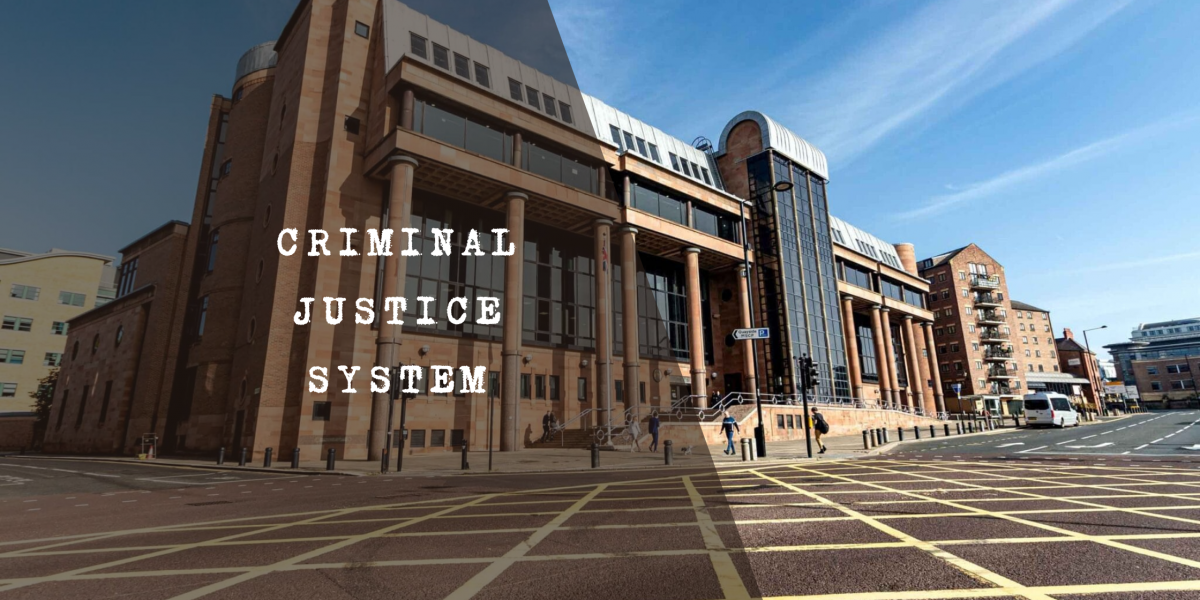
Drawing on key researchers and the evidence base gathered.
Understanding the Criminal Justice System and Its Role Today
Criminal justice is the system of practices and institutions responsible for enforcing laws, punishing offenders, and rehabilitating those who have been convicted of crimes. It is a complex and multifaceted system that plays a vital role in maintaining social order and protecting the community from crime.
Yet beneath this conventional description lies a far more contested picture. A critical criminological perspective asks not simply how the system functions, but whose interests it serves, who it targets, and why certain behaviours, and certain people, are more likely to be defined as criminal in the first place.
What Is the Criminal Justice System?
At its core, the criminal justice system is designed to respond to crime in a structured and consistent way, moving from investigation through prosecution, trial, sentencing, and, where applicable, rehabilitation. Mainstream, or positivist, criminology has traditionally treated this process as broadly neutral, focusing on identifying the causes of individual offending behaviour. Critical criminology takes a different starting point entirely. Rather than accepting the system as an impartial referee, critical criminologists argue that the unequal distribution of power, wealth, and social resources shapes not only who commits crime, but who gets labelled a criminal in the first place, and whose interests the law ultimately protects.
This tradition traces its intellectual roots to Karl Marx, whose analysis of capitalism highlighted how social institutions, including law, policing, and punishment, developed alongside industrialisation to manage the conflicts produced by economic inequality. Although Marx himself was not a criminologist, his ideas influenced later conflict theorists such as Thorsten Sellin, George Vold, and Austin Turk, and, from the 1960s and 1970s onwards, a distinctly radical and critical criminology emerged that treated the criminal justice system itself as a legitimate object of scrutiny, rather than a fixed backdrop against which crime simply happens.
Holding Offenders Accountable – But Whose Accountability?
The conventional narrative holds that individuals must be held accountable for their actions, that punishment deters future offending, and that this in turn keeps communities safe. Critical criminologists do not dismiss the importance of accountability, but they challenge the assumption that the system applies this principle evenly.
Left realist criminologists, for example, have argued that public and policy attention has historically concentrated on street crime, such as robbery and assault, while corporate and state crimes causing far greater social harm receive comparatively little scrutiny. This selective focus is something to argue, as it is not accidental. It reflects whose behaviour society has chosen to define as dangerous, and whose it has chosen to overlook.
This unevenness becomes more visible when examining ethnicity and the justice system in England and Wales. The Lammy Review, an independent 2017 government-commissioned inquiry led by David Lammy MP, found significant racial disparities across policing, prosecution, sentencing, and imprisonment. Analysis within the review found that arrest rates were higher across all ethnic minority groups compared with the white population, with rates for Black men roughly three times higher. Subsequent research has continued to document similar patterns of disproportionality across prisons, plea decisions, and youth justice outcomes.
Academics such as Liz Fekete have gone further, arguing that the Lammy Review, while valuable in exposing disproportionality, avoided naming institutional racism directly, a finding that had already been established in the 1999 Macpherson Report into the murder of Stephen Lawrence. From a critical perspective, this matters greatly: describing disparities as unexplained bias is a very different claim to describing them as evidence of structural and institutional inequality embedded within the system’s ordinary operation.
Rehabilitation, or Managing the Poor?
Rehabilitation is often presented as the compassionate counterpart to punishment, recognising that offenders may face underlying issues such as addiction, poverty, or limited education. Critical criminologists broadly welcome this recognition, but push the analysis further, asking why these underlying issues exist so persistently among the same populations that the justice system disproportionately criminalises.
Research into racially marginalised men’s experiences of imprisonment in the UK has identified recurring themes: a sense of powerlessness within an overwhelming system, direct experiences of racism, and disconnection from cultural identity. These findings suggest that rehabilitation cannot be understood in isolation from the wider social and structural conditions, including school exclusion, contact with the care system, and mental health service access, that critical scholars argue channel particular groups towards the justice system long before any offence takes place.
Critical criminologists therefore tend to be sceptical of rehabilitation programmes that focus solely on changing individual behaviour without addressing these structural drivers. From this perspective, a system that simply processes and corrects individuals, without questioning the conditions that produced their circumstances, risks reproducing the very inequalities it claims to resolve.
How Criminal Justice Affects Communities
Mainstream accounts suggest that an effective criminal justice system reduces crime and restores public trust. Critical criminology complicates this picture considerably. If certain communities experience over-policing, disproportionate arrest rates, and harsher sentencing outcomes, then the system’s effect on trust is unlikely to be uniform across society.
Research examining ethnic disproportionality has consistently shown that the drivers of criminal justice contact are not limited to offending behaviour alone. The Lammy Review noted particular concern regarding the criminal records regime, finding that thousands of Black, Asian, and minority ethnic children had been added to police databases over a five-year period, including for minor offences, with consequences that could follow them into adult employment for years afterwards. Critical criminologists then argue that such mechanisms illustrate how the system can entrench disadvantage rather than simply respond to it, extending the reach of criminalisation well beyond the original offence.
This is why critical criminologists often describe themselves not merely as researchers of crime, but as social theorists, historians, and activists, reflecting the discipline’s broader concern with challenging the assumptions of mainstream, state-aligned criminology rather than simply operating within it.
Building a Fairer, Safer Future
A critical criminological perspective does not reject the criminal justice system outright but insists that meaningful reform must go beyond procedural adjustments. The Lammy Review’s own recommendations included a principle of ‘explain or reform’, requiring justice institutions to either provide an evidence-based explanation for ethnic disparities or take active steps to address them. We have argued that recommendations of this kind, while important, must be matched by a willingness to examine the deeper structures, economic inequality, institutional racism, and the social construction of criminality, that produce disparity in the first place.
Ongoing reform efforts, including greater data transparency, disaggregation of ethnicity statistics, and improved oversight of school exclusions and care system pathways, reflect a gradual shift towards this more structural understanding. Yet critical criminologists would argue that lasting change depends on treating the criminal justice system not as a neutral machine in need of fine-tuning, but as a social institution shaped by, and reproducing, the inequalities of the society around it.
Food for thought…
Criminal justice undoubtedly plays a role in maintaining social order and responding to crime. But in critical criminology we reveal that its purpose and effects are far from neutral. Accountability, rehabilitation, and public trust are all shaped by deeper questions of power, inequality, and who the system has historically been designed to control. Drawing on the work of critical theorists from Marx onwards, and on contemporary evidence such as the Lammy Review, this perspective challenges us all to look beyond individual offenders and ask harder questions about the structures, institutions, and inequalities that criminal justice continues to reflect.
Building a genuinely fairer and safer system requires more than efficient enforcement; it requires confronting these structural realities directly, rather than treating disparity as an unfortunate but incidental by-product of an otherwise fair process.
References
- Lammy, D. (2017). The Lammy Review: An independent review into the treatment of, and outcomes for, Black, Asian and Minority Ethnic individuals in the Criminal Justice System. UK Government.
- Fekete, L. (2018). Lammy Review: without racial justice, can there be trust? Race & Class.
- Macpherson, W. (1999). The Stephen Lawrence Inquiry. UK Government.
- Floyd, R., McKail, R., Akra, A., & Saunders, T. (2026). Racially-marginalised men’s experiences of prison in the United Kingdom: A systematic literature review. SAGE Journals.
- Ministry of Justice (2020). Tackling Racial Disparity in the Criminal Justice System: 2020 Update.