
My Experience of Stranger Stalking
Deconstructing the Myth of Consent
Systemic Isolation and the Trap
Bypassing Consent in Plain Sight
Perpetrators weaponise a victim’s normal life. They use initial encounters not to connect, but to establish absolute control. They want to limit opportunities for you to tell people about what they do. My discomfort escalated into an agonising encounter when a seemingly innocuous date turned unsettling. This man displayed an unhealthy, invasive amount of knowledge about my life. He exposed details I had never shared with him.
The Reality of Confinement
Inside the vehicle, the dynamic shifted from uncomfortable conversations and boundary-pushing to absolute physical confinement. I found myself trapped in a one-sided space dominated entirely by his boasting and self-praise. The most alarming indicator of his intent was his navigation. He did not ask for my address; instead, he effortlessly drove my route home.
By taking the wheel and commanding the geography of the journey, he held all the power.
This tactical control was something I had not given any thought to until much later, when I answered professional questions and listened to the expert feedback. He was insisting on driving me right to my door. In my uncomfortable state, I intercepted his plan and asked him to pull over at a local church, choosing a communal sanctuary to break the confinement. Clambering out of the car into a wave of controlled panic and a huge sense of relief, I focused entirely on walking away without looking back, completely dismissing his visible arrogance.
Walking down the bank to home, I found safety and solace in my brother’s company. I confided in him about the unsettling encounter and my firm decision to never see this individual again. As we discussed the implications of his intrusive knowledge, I felt a sense of clarity. I knew I wasn’t ready for this dating scene and simply needed more time to heal on my own terms.
Love Bombing as a Tactical Breach
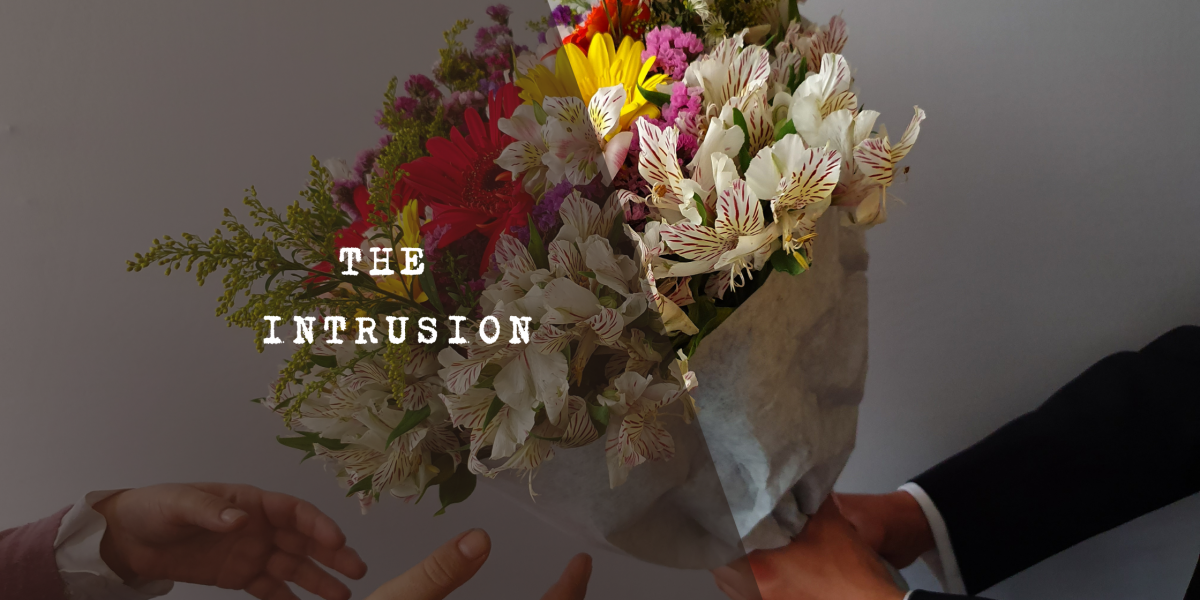
The operational reality of stranger stalking relies on completely bypassing a victim’s consent. The following morning, as I was getting my daughter ready to go out, an uninvited knock came at my front door. Not expecting anyone, I opened it only to be confronted by a massive bouquet of flowers that completely filled the porchway, completely obstructing my view of who stood behind them. I honestly thought it was my previous partner, and I felt a little excited, then annoyed at the lies he had told me.
Reaching over the arrangement, I experienced a severe shock. Standing there was the individual from the previous night, smiling as he pushed the flowers further into my home. I had never given him my address, nor had I consented to any further contact. This was a calculated, uninvited intrusion into my private life. By weaponising an overwhelming physical gesture on my doorstep, he intentionally engineered a high-stress confrontation right in front of my brother with my six-year-old daughter in the living room. This boundary violation was the sliding door to a targeted course of conduct that would dictate the next three violent years.
Practice, Reality, and Professional Accountability
I share this specific part of my life because it illustrates a stark reality: victims do not choose who creates chaos or forces a way into their lives. This case study, along with the raw dynamics of stalking behaviour, forms the core of the training courses and professional talks I deliver to frontline workers. My objective is to provide absolute clarity on what it feels like to navigate this threat, delivering raw data and tactical context without shame, bias, or victim-blame.
For any practitioner reading this, consider this operational context before you interview a victim or survivor. Just because it didn’t happen to you, doesn’t mean it didn’t happen the way the victim is telling you.
Ask yourself if you are equipped and prepared to conduct the interaction safely, and do you understand that being trauma-informed means no judgement or opinions are required from you. If you are not, step back, pass it over, and seek expert collaboration. Failing to understand the specific tactics of stranger stalking risks damaging an active legal case and causing catastrophic social harm to a person who is already hyper-vigilant.
From Frontline Practice to a Practitioner of Critical Criminology
My entry into social housing and community safety was not just a career choice. It was an active process of learning, watching, and documenting how the system handles vulnerable people.
I chose to return to university to study critical criminology because I needed to answer a fundamental question: why are cases like mine routinely dismissed and ignored by frontline agencies?
We have to ask why it takes over 170,000 missing individuals, or victims being recorded as dead before structural failures are acknowledged. Confirmation data is from the UK Missing Persons Unit (UKMPU), which is a branch of the National Crime Agency (NCA), alongside data compiled by the independent UK charity Missing People.
The state operates on a cycle of retrospective regret, publishing “lessons to be learnt” only after a tragedy occurs, yet those lessons are never truly implemented or audited by our British Government. As a survivor and a practitioner, I refuse to accept a system that requires a body count before it takes stranger stalking seriously. My research is dedicated to exposing institutional inertia that makes victims invisible and demanding preventative accountability from the agencies tasked with our protection.
Frontline Accountability and Research
Through my business, Hilton & McEwan, we actively investigate, research, and educate on stalking, violent assaults, and family abuse. My career as a professional in social housing and community safety grew from the immediate need to collaborate with and challenge the system handling my own offender, and it is only now where the system is beginning to listen to hundreds of people who share similar experiences.
As a critical criminologist, my focus remains entirely on exposing poor practice within agencies, broken institutional processes, and the legislation that inadvertently adds to social harm.
To understand why the justice system fails to see these patterns, read my analysis on reframing stalking as an independent crime.
Thank you for reading and for sharing this space with me. To everyone navigating this reality or working on the front lines to change it, remember to stay connected. It may just save a life.