
Female Recidivism
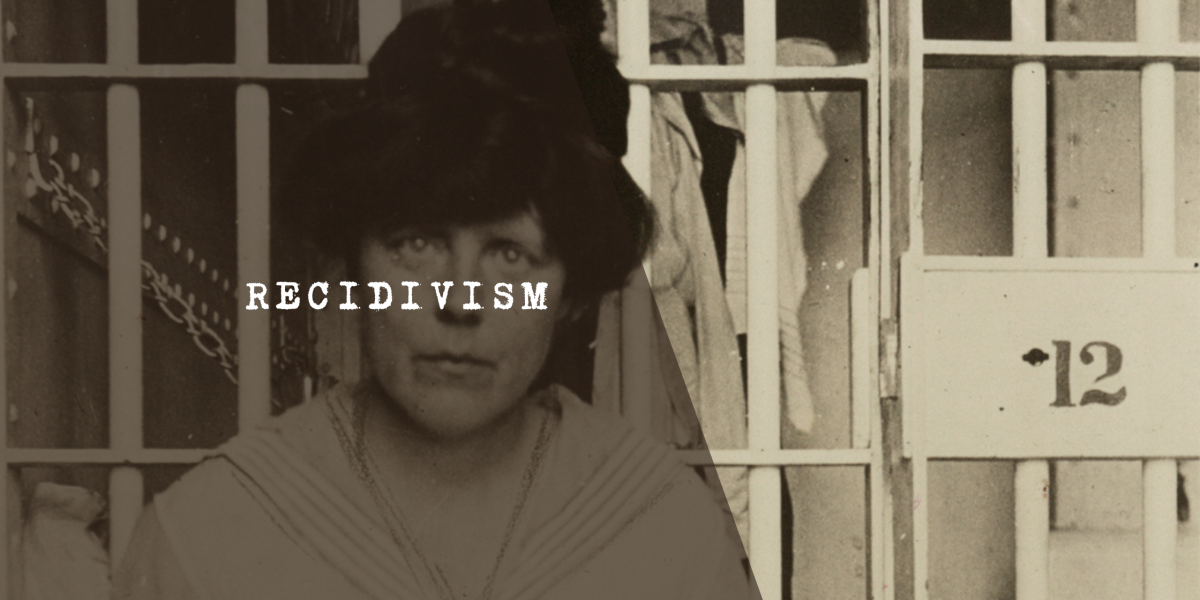
Why the Justice System Fails Women
To date the criminal justice system is failing women. While the total number of prisoners across England and Wales has faced sustained pressure, women continue to represent roughly 4% of the overall prison population. This seemingly small percentage masks a severe and recurring crisis because women are trapped in a high-velocity revolving door that headcounts fail to capture. While they comprise only a tiny fraction of the daily prison population, women cycle through custody at a vastly accelerated rate, with over 70% serving sentences under 12 months for non-violent offences for debt or food theft. Because men make up 96% of the penal system, all operational policies, security assessments, and rehabilitation frameworks are designed entirely around male offending patterns. This structural invisibility forces the few women in the estate into extreme geographic isolation, as England and Wales hold just 12 female facilities compared to over 100 male prisons. Consequently, incarcerated women are routinely sent over 60 miles away from their children and family, losing their home, personal belongings such as baby photos, memorabilia and fracturing family ties, which actively drives the devastating 71% short-term re-offending rate because they returned to a homeless situation and start a transient journey of lack of social housing, hostels mixed with social services administrative hurdles to get access to their children and waiting times for benefits of weeks. It’s a lot for a person to navigate along with keeping emotions and trauma in check to meet the requirements of the privileged who often sit in moral judgement.
Data published by the Prison Reform Trust indicates that nearly three in five women (58%) leaving custody are reconvicted within a single year. When looking at short-term sentences of 12 months or less, that re-offending figure skyrockets to an alarming 71%.
These figures show that the penal estate operates as a revolving door rather than a place of rehabilitation and with charities closing their doors, where are women to turn to for assistance? To understand why women keep returning to custody, it is necessary to examine how this institutional failure developed.
Inaccessible for those who are in desperate need.
The modern crisis is a direct evolution of systemic barriers, structural neglect, and a historic refusal to build a justice framework tailored specifically to female needs. This of course is outside of the fact that legal aid is becoming completely inaccessible for those who are in desperate need.
The strict means-testing thresholds set by the Legal Aid Agency mean that many vulnerable women are trapped in a punishing gap: they cannot afford private representation, yet their income or nominal assets put them just above the arbitrary threshold to qualify for free assistance. By making legal protection financially inaccessible, the system effectively denies these women any real defence, fast-tracking them straight into custody simply because they were priced out of justice.
Victorian Moral Policing
The roots of the modern failure trace back to the 19th century. In the 1800’s, the criminal justice system viewed female deviance through a moralistic and religious framework. Crime was not seen as a breach of the law; it was treated as a fundamental betrayal of womanhood itself – letting society down, as if they were all in it together. Women were expected to occupy the domestic sphere, acting as guardians of purity and family virtue, which is laughable as they suffered marital rape, violence, sanatorium detainment to strip them of their assets and God help them if they ever say no to a man or tried to stand up to others.
A woman who committed theft, engaged in sex work (regardless of poverty) or struggled with public drunkenness was branded a fallen woman. These unfortunate women included previously vulnerable wealthy women whose husbands ran off or had died and left behind horrendous debts without their knowledge. With their inheritance or dowry instantly gone, these formerly affluent women found themselves thrown into the same penal institutions as the destitute. Stripped of their hair, status and protection, they had to learn directly from the women of poverty just to stay alive within the harsh prison environment. This unexpected crossing of class lines demonstrated that when it came to female criminality, the Victorian justice system stripped away all privilege, reducing every incarcerated woman to the same basic struggle for absolute survival
Historically…
Historical researchers such as Lucia Zedner, an expert in penal history and criminology, have documented how Victorian authorities designed carceral systems to enforce forced repentance. In institutions like London’s Holloway Prison, the processes focused heavily on enforcing silence, isolation, and domestic hard labour such as laundry and needlework. The objective was to discipline women back into submissive, low-status domestic roles.
This approach actively generated high rates of persistent re-offending. Because a criminal conviction resulted in total social banishment, released women were entirely cut off from their families, respectable employment, and housing. Survival-based crimes became their only choice. Records from the 19th century frequently reveal that a small, highly destitute group of women accumulated dozens of repetitive convictions for low-level offences. The system punished their moral failure while systematically cutting off every path to economic survival.
The Medical Model and the Prison Surge
As the 2000’s approached, the language of the justice system shifted from religious sin to medical (a psychological pathology). Medical professionals began to categorise justice-involved women as hysterical, emotionally unstable, or biologically deviant. Punishment was frequently repackaged as medical intervention. Women were institutionalised or medicated to force them to conform to acceptable social standards, while the underlying social issues of poverty and domestic abuse remained unaddressed.
The true escalation of the modern crisis occurred during the final decades of the 20th century. The introduction of aggressive policing strategies for sex work and strict anti-drug legislation caused the female prison population to spike dramatically. In the UK, the number of women behind bars more than doubled during the 1990’s.
Sociologist and criminologist Pat Carlen’s landmark research during this era exposed how courtrooms routinely penalised women based on typologies and how poorly they fit traditional family expectations. Women who were deemed bad mothers or unconventional wives faced harsher sentencing. Minor property crimes and low-level drug offences began resulting in custodial sentences. The system grew exponentially, taking in thousands of vulnerable individuals without any infrastructure to support their return to the community.
The Institutional Trauma Trap
Today, the moralistic language of the 1800’s and the clinical terms of the 1900’s have been replaced by bureaucratic indifference which can lead to confusion for many. Modern penal systems are structurally built around male populations, male risk patterns, and male behaviour. When women are placed into this environment, their specific realities are ignored, obscuring the defining characteristic of modern justice-involved women: extensive, unaddressed trauma.
Figures from advocacy organisations like Women in Prison establish that over 70% of incarcerated women report histories of domestic violence, physical abuse, or childhood neglect. Because the system ignores the reality that the majority of these women are survivors of severe domestic and sexual abuse, heavy-handed, male-centric security measures act as a direct trigger. Instead of addressing these root causes, a prison sentence inflicts further harm, as routines involving physical restraints, surveillance, and sudden isolation frequently mimic the dynamics of past domestic abuse. This environment provokes extreme psychological distress, which is reflected in self-harm statistics. The Howard League for Penal Reform reported that the rate of self-harm in women’s prisons is eight-and-a-half times higher than in men’s jails, illustrating an environment in acute crisis.
The Roadblocks to Re-entry
The high rate of recidivism is a direct consequence of what happens to a woman immediately after she completes her sentence. The moment of release is often where the system fails most conspicuously, presenting three distinct barriers:
- The Loss of Safe Housing: A short custodial sentence is frequently long enough for a woman to lose her local authority tenancy. Upon release, many face immediate homelessness or are forced to return to households where their previous abusers reside. Without stable, safe shelter, managing an addiction or avoiding survival-based theft is nearly impossible.
- Quick note: A woman’s tenancy does not automatically end when she is sent to prison. Legally, the tenancy can be kept indefinitely, provided that the rent continues to be paid in full and the terms of the lease are not breached. To avoid losing her home or facing severe debt, a tenant should contact prison housing advisers or a resettlement worker as soon as possible.
- The Family Breakup: Approximately 95% of children whose mothers are sent to custody must leave the family home. The state often initiates care proceedings or permanent family separation during the mother’s sentence. This creates immense psychological distress. When a woman is released, the complex legal battle to regain custody must be fought while living in temporary accommodation and meeting strict probation terms, which frequently causes a relapse into substance misuse.
- The Economic Cliff: Research from organisations like Working Chance demonstrates that women leaving prison are nearly three times less likely to secure employment upon release than men. The combination of a criminal record, gaps in employment history, and a lack of childcare support restricts these women to extreme poverty, which drives them back toward informal or illegal economies.
Evidence-Based Alternatives
The solution to reducing female re-offending has been well-documented for years. In 2007, the seminal Corston Report by Baroness Jean Corston called for a total overhaul of how the state treats vulnerable women in the penal system. The review argued that prisons are disproportionate and inappropriate places for the vast majority of women sentenced for non-violent, minor offences. It recommended dismantling large, isolated women’s prisons and replacing them with a network of community-based women’s centres.
Data collected by the Ministry of Justice’s Justice Data Lab aligns this community approach works. A study analysing the impact of the Together Women project showed that women supported by gender-specific, community-based centres had a re-offending rate of just 26%, compared to 35% for an identical control group that went through traditional court and penal routes.
True reform requires shifting funds away from custodial cells and redirecting them into comprehensive grassroot community support. This means providing immediate access to secure, women-only housing, clean drug rehabilitation services, mental health care, and specialised employment guidance. Punitive systems cannot fix social deprivation, complex trauma, and poverty. Until the state stops using prison cells as a default solution for vulnerable women, the cycle of recidivism will continue just as it did two centuries ago.